skip to content
Scroll CONRAN GROUP

Hotel Icon

Hong KongSLEEPER, JANUARY 2011 / 2012

Rocco Design Architects, CL3 and Conran & Partners have collaborated to transform staff living quarters into a fully operational teaching and research hotel for The Hong Kong Polytechnic University.

Words: Catherine Martin

Photography: Courtesy of Hotel Icon (unless otherwise stated)

For the majority of guests passing through the doors of Hotel Icon, there is little evidence to suggest that this is anything other than a typical hotel. But beneath the surface, Hotel Icon is an important facility in training the next generation of hoteliers.

Owned by The Hong Kong Polytechnic University, the building has retained its original staff residential function and now incorporates a 262-room hotel and state-of the-art teaching complex for the School of Hotel and Tourism Management.

Although Hotel Icon initially met with controversy from neighbouring hotels – owners were granted a nominal land use transfer fee by the government instead of the rumoured market value of HK$300 million – it is hoped that the 2,000 students that are educated here annually, will go on to benefit Hong Kong’s hotel industry as a whole. Playing a major role in the schooling programme as well as helping establish the style of the hotel, General Manager Richard Hatter – who previously spent two decades at Shangri-La Hotels and Resorts – is tasked with the dual challenge of managing an educational facility and a commercial enterprise. The credibility of the school, he says, will be measured by the reality of making the hotel commercially viable, with profits made being fed back into education.

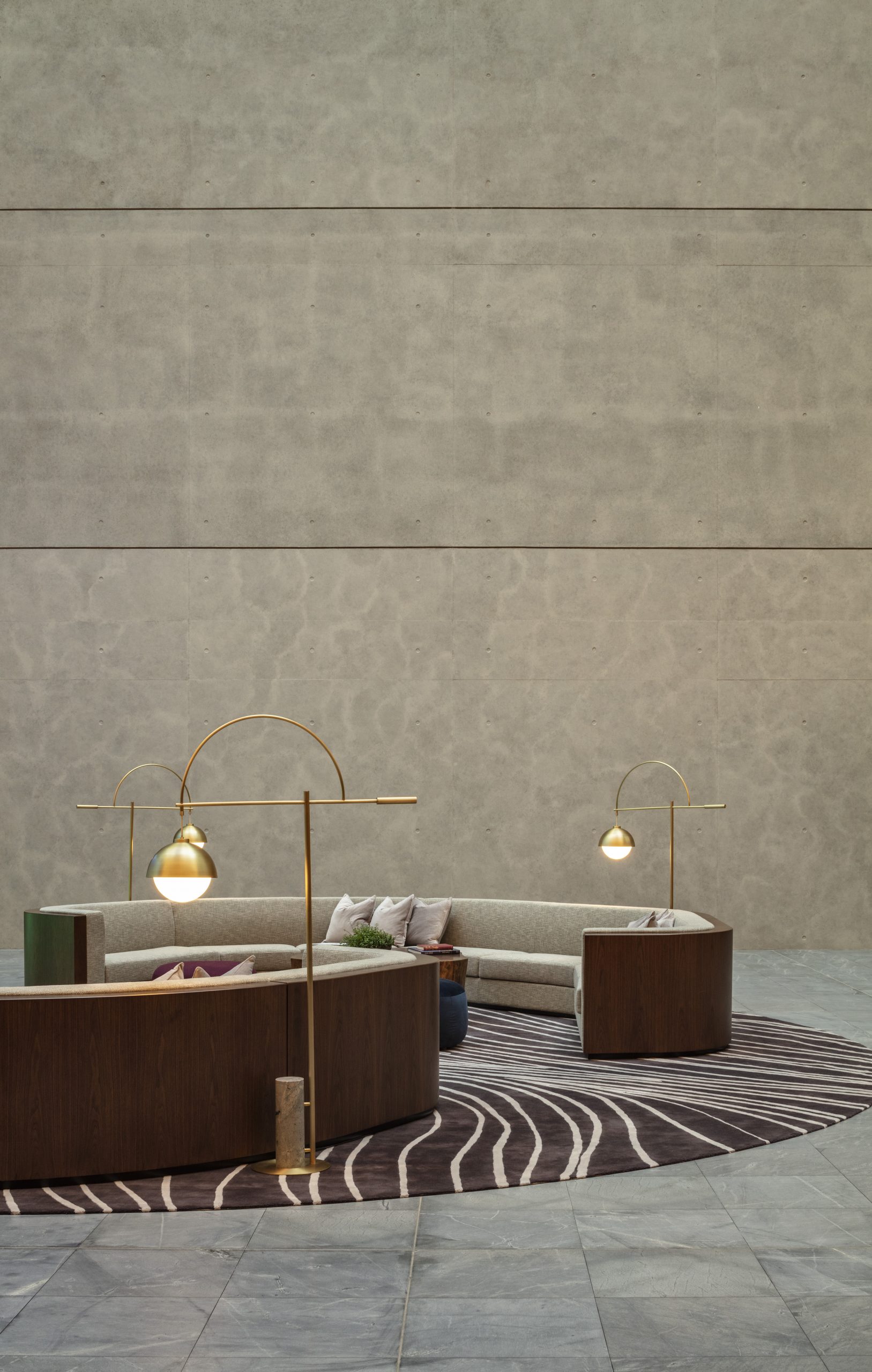
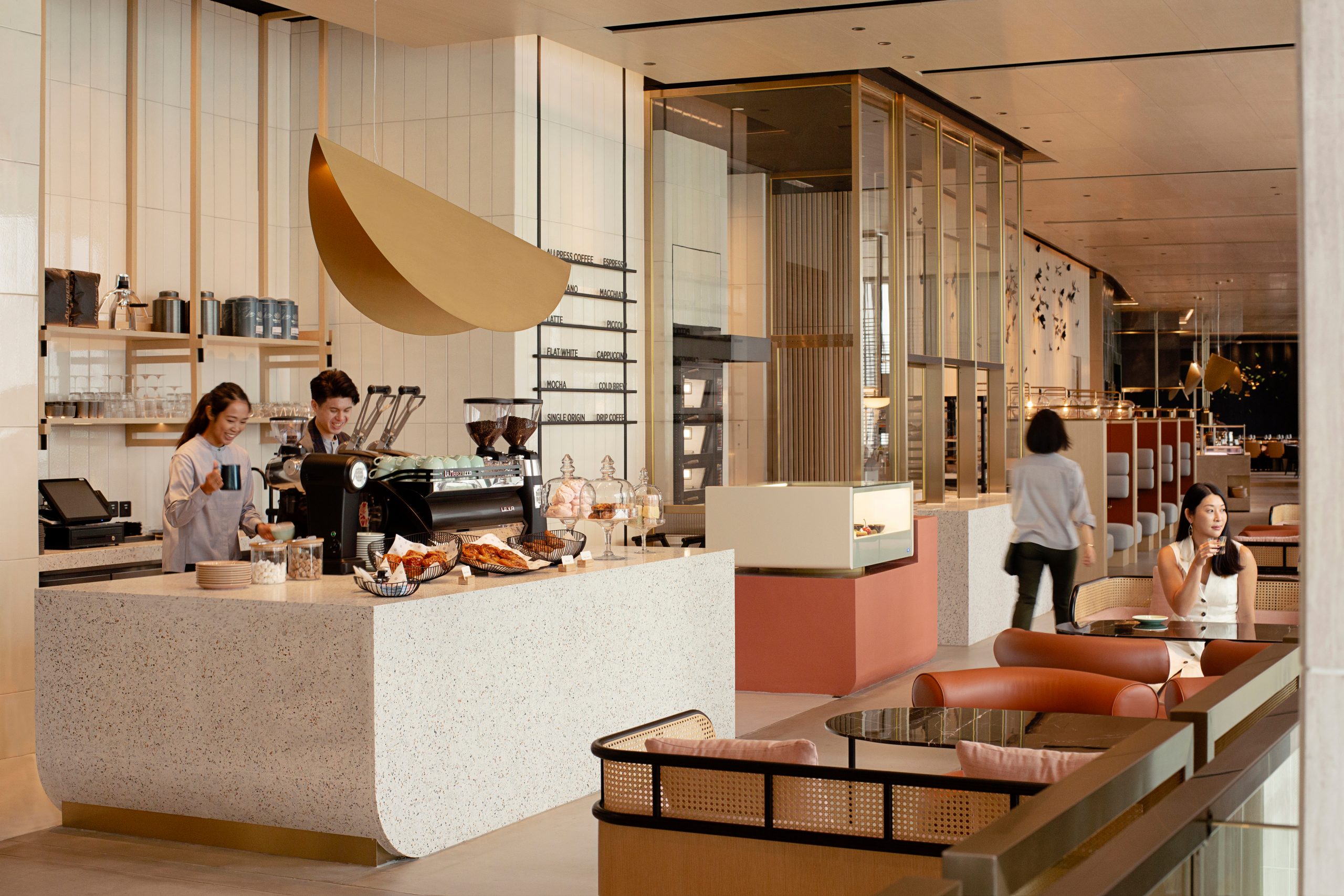
The hotel itself has been designed by Asian and British firms to incorporate Eastern and Western design influences. Hong Kong-based Rocco Design Architects was responsible for the 28-storey hotel tower, opening it up with the introduction of glass atria at various levels allowing visual permeability to connect either side of the site. The lobby too is a glass atrium and suggests a park-like environment with its abundance of natural daylight, textured wood flooring, carved oak benches, and a neighbourhood café. An 18m vertical garden created and installed by French botanist Patrick Blanc featuring over 8,000 thriving plants in 75 species adds to the landscape and highlights accents of green in the upholstery.

Another local firm of international acclaim, CL3, was responsible for the design of the 262 guestrooms, Silverbox Ballroom, and lobby. Managing Director William Lim believes that because of the hotel’s educational mission, it had to break new ground in order to inspire. “We needed to rethink everything we knew about conventional hotels and how to move this to the next level,” he explains. “We worked on the project for four years, studying every aspect of the design, working closely with the architect to re-plan and rethink the flow of the hotel.” Lim also considered the flexibility of spaces and their use at various times of the day, creating for example a function room that also operates as a school auditorium, a lobby café becomes that becomes a tapas bar by night, and a poolside juice bar that transforms into a chic cocktail venue. The stunning Silverbox Ballroom, based on black-box theatre concept, is also a flexible space with a latticework crystal ceiling that can change colour through the use of LED lighting to suit different events.

“We want the public areas to be like streets in Hong Kong which is active, vibrant yet with its pockets of quiet moments,” explains Lim. “After all, the design is for people and the way people use spaces is always an inspiration to us.”

The guestrooms, ranging in size from 36m2 to 80m2, follow Lim’s favoured aesthetic of having a strong architectural sense, yet elegant, clean and contemporary. A neutral colour palette ensures the harbour view, visible from 80 per cent of the rooms, is the key focus. Taking a fresh look at guestroom planning, Lim has introduced a curved sliding door to separate the bedroom and bathroom that effectively opens up the space. To fulfill the expectations travellers expect from a hotel – particularly one looking to train the next generation of hoteliers – guestrooms feature a number of technologically advanced accessories including online Radio Frequency identification keycards, 40-inch Ultra High Definition LED TV, interactive IPTV with express check-out functions, docking station with alarm clock for iPhone or iPod, complimentary wired and Wi-Fi highspeed internet, iCloud printer (Club rooms) and kinematic eco-friendly desk and chair.

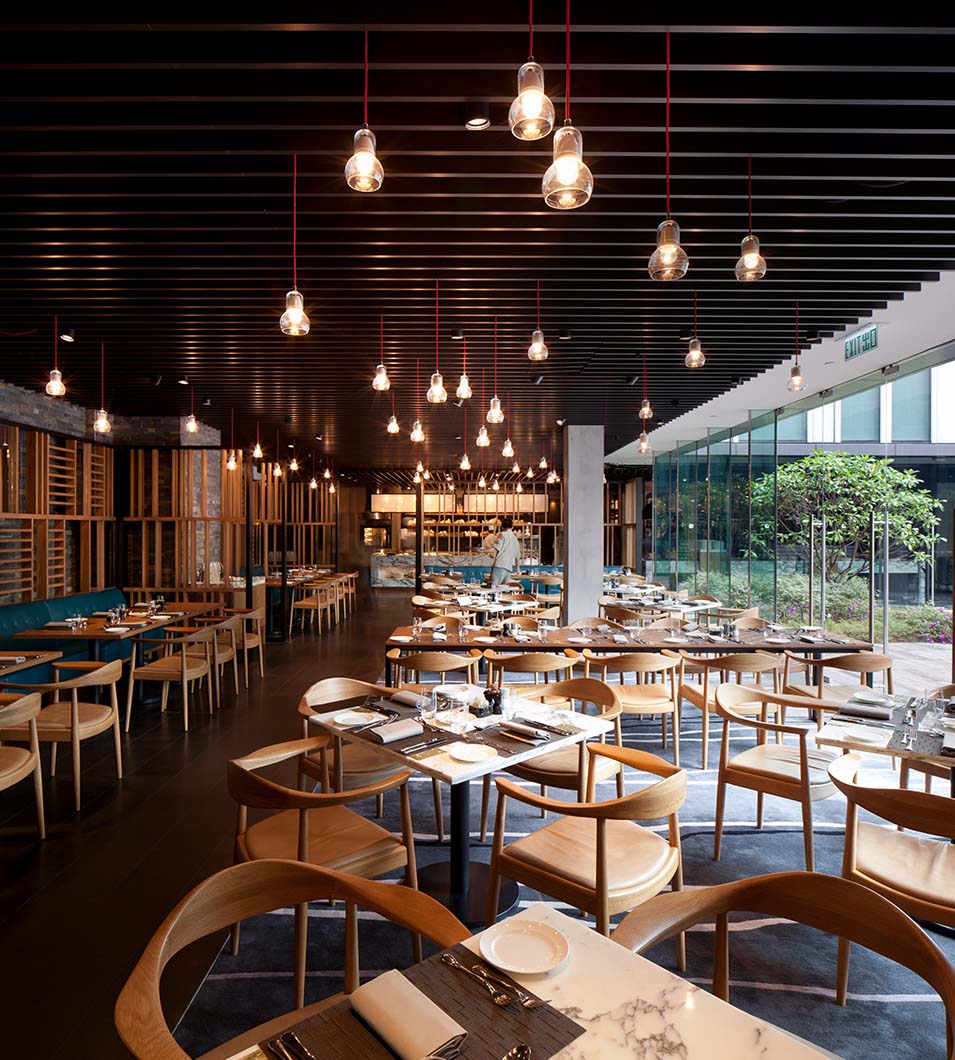
Hotel Icon’s two food and beverage offerings have been designed by UK-based Conran & Partners, led by Managing Director (Far East) Richard Doone and Associate Director Tina Norden. Inspired by the wet markets of Hong Kong, The Market is a reinterpretation of the popular buffet-style restaurant. “Our intent was to capture the vibrancy of the traditional Asian food market in their rawness, busyness and showcase their abundance of food but represent this in a contemporary context,” explains Norden. “Guests enter through a rustic timber-lined tunnel as a transition from the hotel into the restaurant area, past the counter area with its displays of food and into the dining area. The materials are natural and tough and we have left the ceiling services and structure exposed through a metal slatted screen. In contrast there is a close attention to detail, the counters are clad in marble, carefully detailed screens separate the dining rooms and the banquettes are upholstered in leather. The result is ‘tough luxe’, inspired by the Asian food markets and resulting in a vibrant contemporary dining experience.”

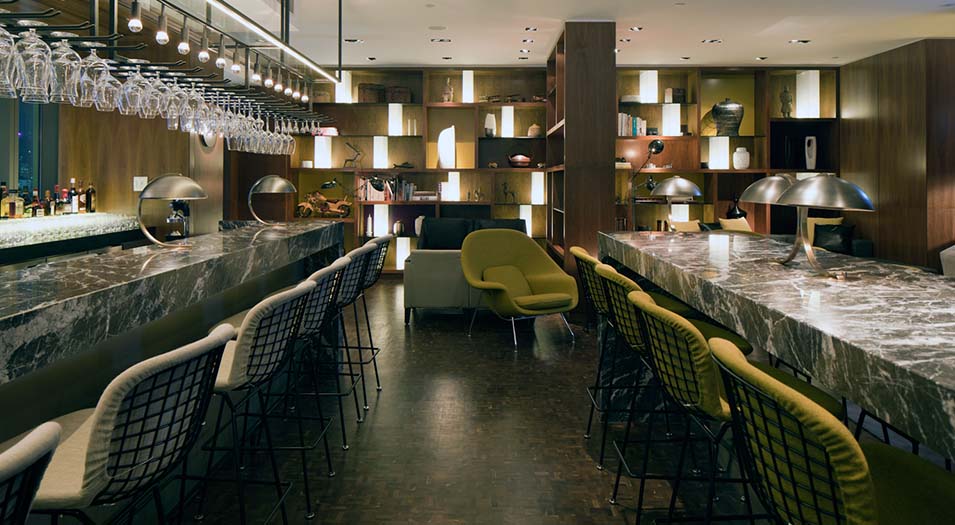
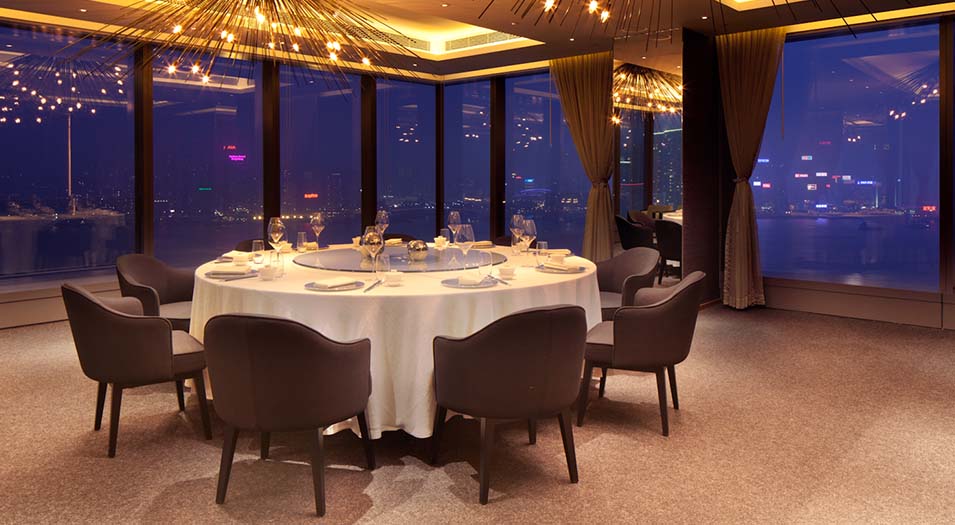
By contrast, Above & Beyond is more refined with a Western influence and takes its inspiration from the new breed of contemporary private members clubs. Located on level 28, it incorporates a fine dining Chinese restaurant, bar, lounge, and private dining rooms for executive guests. The intention to create an exclusive sanctuary high above the city is achieved through the use of timber paneling, patterned marble floors, and carefully selected artefacts and books. Artwork throughout the hotel comes from students at the School of Design as well as established local artists.

Complementing the ‘real-world’ hotel environment – which is staffed by 360 professionals and 100 trainees – are the teaching and research facilities. Of note is the Vinoteca Lab for wine appreciation, a student-run restaurant, and the Samsung Digital Lab for Hospitality Technology where students can practice the using the latest programmes used in the industry. To further facilitate research, three prototype guestrooms under the themes of design, innovation, and well-being have been built for experimentation of advanced concepts and creative ideas. A crucial learning experience, these prototypes could be where the guestroom of the future is conceived.